




Overview
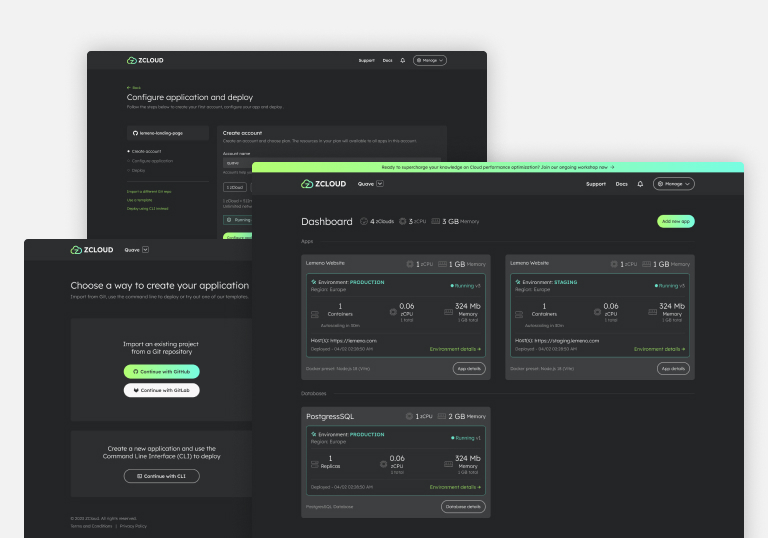
zCloud, a flexible and user-friendly Cloud hosting service, found its beginnings in the autumn of 2022 when we embarked on the ambitious journey to build it from scratch. Our vision was clear: create a service that would allow people to easily deploy and manage apps & databases in the Cloud. At the core of our mission was our commitment to transparency. We wanted our clients to know precisely what they were getting into, without any hidden costs.
Our commitment to flexibility led us to ensure compatibility with a wide array of technologies that seamlessly integrate with Docker. Whether it's apps that run on JavaScript, Java, PHP, Ruby, Python or databases like PostgreSQL, MongoDB, Redis, zCloud was designed to support them all. Moreover, we aimed to provide our clients with the ultimate control over their configurations through Docker, giving them the power to fine-tune their settings to perfection.
One of the hallmarks of zCloud's exceptional service is our dedication to our clients. When they need help, we're there for them. Our commitment to customer support is unparalleled, promising responses within an hour during our working hours, ensuring that our clients are never left in the dark.
Design Challenges
Starting a design project from scratch is never easy. Our journey with zCloud presented unique challenges that demanded creative solutions.
One of the first hurdles we encountered was the need to create a comprehensive color scheme and ensuring it would be visually appealing and consistent across the platform.
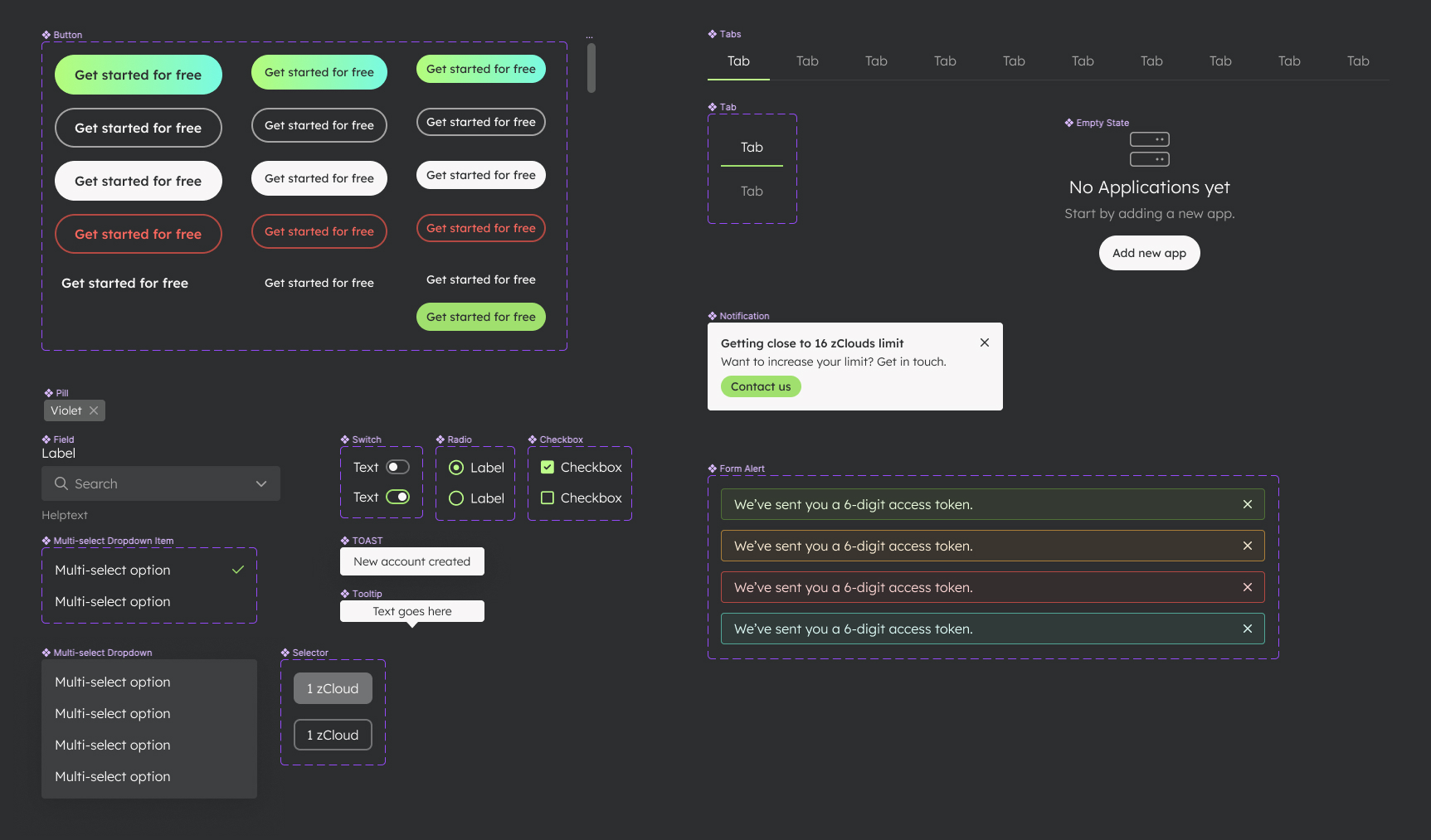
Building a component library was the next big task on our list. With no existing product or clients to provide feedback, we had to lay the foundation for the library ourselves. We aimed to make it optimized for swift development, easy maintenance, and accessibility. Finding the right solution was critical as it would heavily influence the design of our components.
Designing the MVP (Minimum Viable Product) proved to be a unique challenge. Without direct client feedback, we had to rely on competitor analysis and social media discussions to understand user expectations. This allowed us to identify the features that would be most valuable to our clients. Fortunately, zCloud's CEO extensive industry experience and expertise provided a valuable resource to validate our design decisions.
Our iterative design process revolved around early sharing of our work, collecting feedback, and making necessary iterations. This collaborative approach ensured that the entire team was aligned with the design direction, leading to fewer surprises along the way.
Product Design
Let's explore the creative process behind zCloud's design. We'll delve into each challenge we mentioned in the previous section.
Color scheme
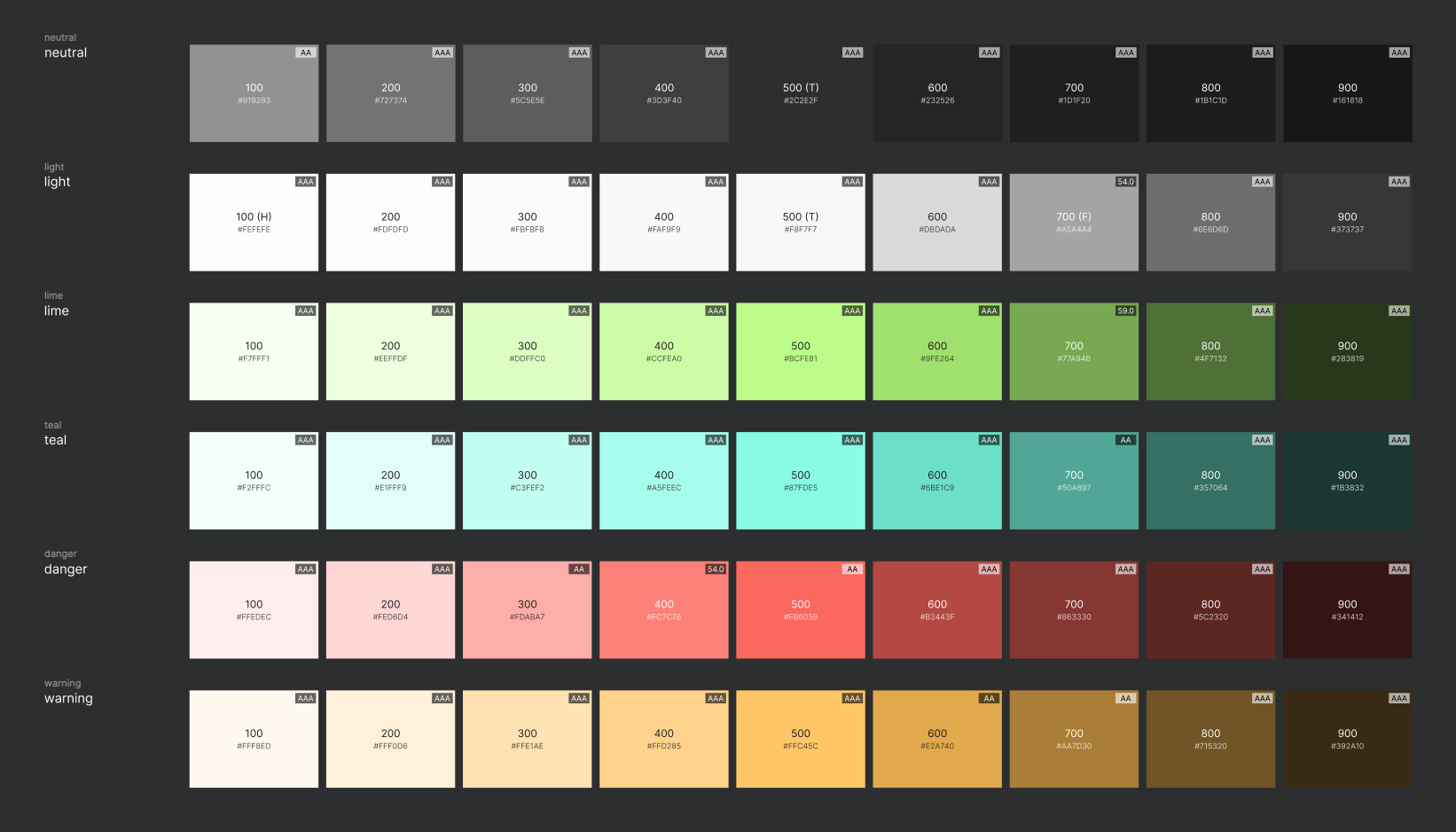
Our first hurdle, the color scheme. The process started with our two primary brand colors: lime and teal. We knew we would use a dark theme, as requested by the CEO, and we used this as a starting point. From there, we expanded the palette by creating four shades and four tints from each color. The result was not only a visually appealing scheme but also a versatile one that could be applied to different elements within the app. Lime became the primary color for buttons and links, while teal was used as an accent color. We also addressed neutral, light, and supporting colors. The process of creating the color scheme involved laying down 9 empty blocks (named 100-900), choosing a color to go in the middle block (500) and then creating 4 shades and 4 tints from that color. Once we had all the variations for all the colors we harmonized and balanced them out.
Component library
When it came to building the component library, we carefully considered our options. We aimed for a solution that would allow for quick development and easy maintenance. After evaluating several options, we settled on Radix, an open-source component library. One of the advantages of Radix was that it provided components without any predefined styles, allowing us to customize them according to our design preferences using Tailwind. This flexibility was a significant asset as it allowed us to create basic components in Figma and expand the library as we progressed, aligning with our evolving needs.
Designing the MVP
Given the absence of an existing product and clients in the early stages of our work, designing the MVP posed a unique challenge. To bridge this gap, we embarked on extensive competitor analysis to gain insights into what users were expecting in the market. By monitoring social media discussions, particularly on platforms like Reddit and Twitter, we tapped into the problems and frustrations users were experiencing with our competitors. This valuable information guided us in shaping the features we would incorporate into our MVP. With our CEO's wealth of industry experience, we could trust his judgment in validating various flows and design decisions.
zCloud was renamed to Quave One in 2024.
Simple solutions to complex problems
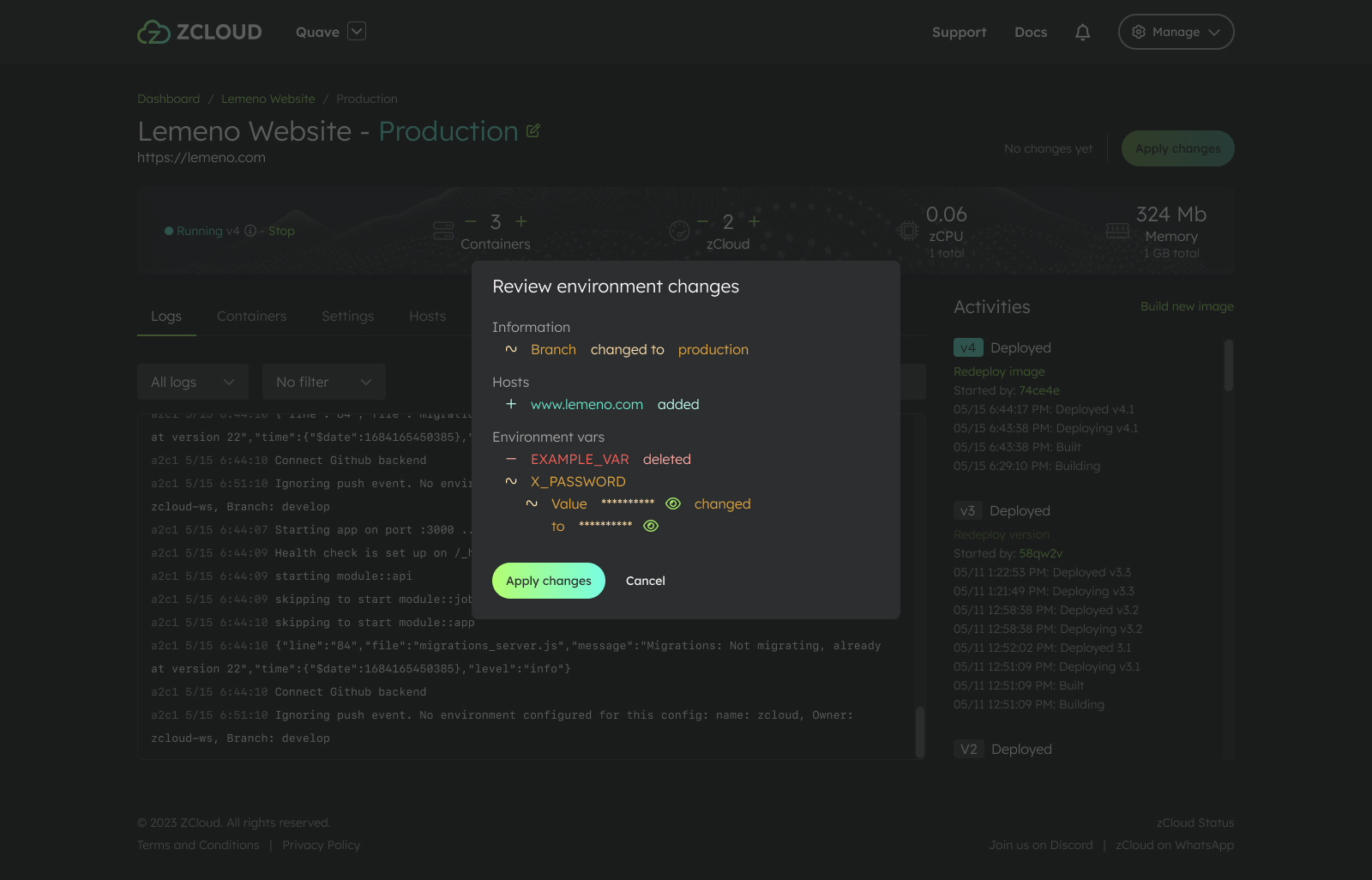
One of the most significant challenges we tackled was making the complex process of deploying and managing apps as straightforward as possible. We had to come up with some pretty interesting solutions to keep things simple for our users. One of our solution addressed a common issue faced by users—knowing when to redeploy or build a new image after making changes to environment host, vars or settings. We designed a feature that enabled users to review all changes before applying them with a single, easily visible button. This not only eliminated confusion but also improved the review process and prevented misconfigurations that could result in downtime. Furthermore, this feature allowed users to track changes made by other team members, enhancing collaboration and transparency.
This prototype shows the basic flow of making a change and applying it:
A sticky bar appears when you scroll the 'Apply Changes' button out of view but that's not visible in the prototype. Here's how several changes would appear in the "See changes" section:
Other features from this project
This is just one of the many features we worked on. We've added a a few more prototypes below that you can browse to get a feel of the product or if you want to check zCloud for yourself go to quave.cloud.
Marketing website
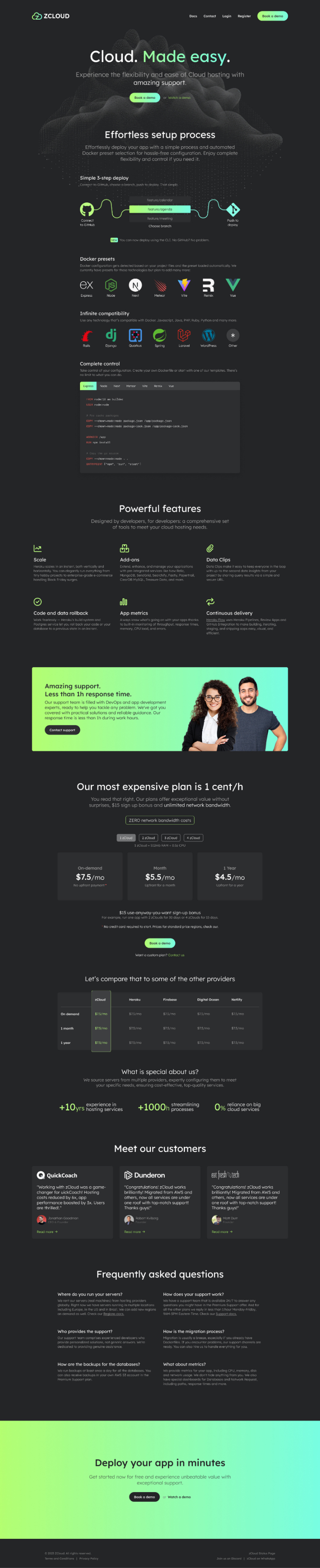
We also designed and built zCloud's marketing website.
Read another case study:

Removing Fibers for MeteorJS. A successful long-term collaboration.
Read Case Study →